
Expense tracking
Check Recurring Payments Before Payday
A practical payday routine for keeping rent, utilities, subscriptions, and transfers visible before they crowd the monthly budget.
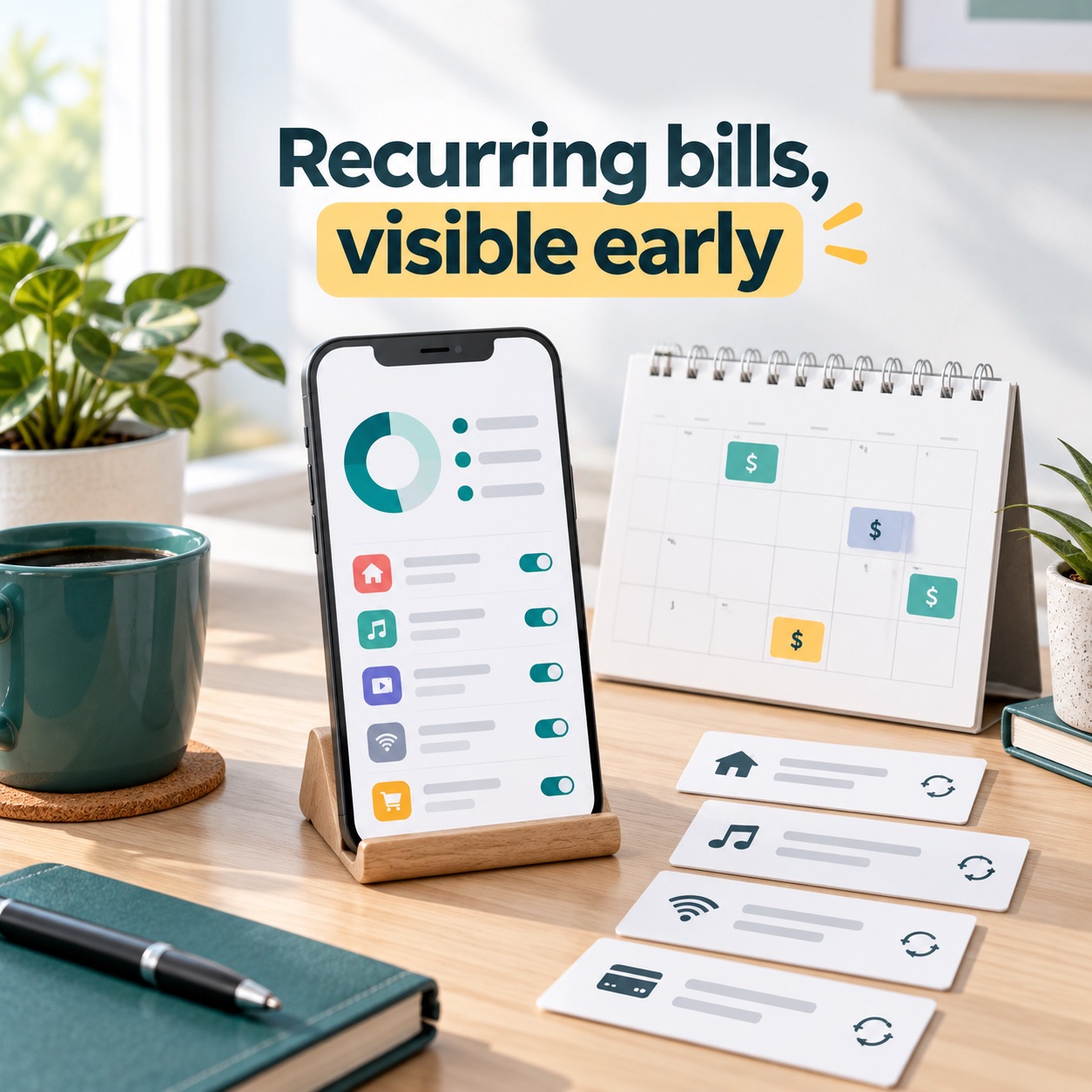
Payday should make the month clearer, not start a race between bills and everyday spending. The easiest way to avoid that race is to look at recurring payments before the money arrives.
Recurring payments are the quiet part of a budget. They repeat without a new decision: rent, mobile plans, utilities, insurance, subscriptions, transport passes, school fees, family transfers, and savings contributions. When they are visible early, the rest of the month is easier to plan.
Start with the next 30 days
Do not try to rebuild the whole year in one sitting. Open the next 30 days and list every payment that is likely to happen without you deciding again.
Capture five details:
- Name - the bill, merchant, or transfer.
- Amount - the usual figure, or a range if it changes.
- Due date - the day it normally leaves.
- Account - the bank, card, or wallet it uses.
- Status - confirmed, estimated, or needs checking.
That last field matters. A utility bill can start as an estimate. A subscription can sit as “needs checking” until you confirm whether it still renews. The point is to get it out of memory and into view.
Look for crowded weeks
A monthly budget often looks fine as a total and still feels tight in one week. That happens when several recurring payments land together.
Scan for clusters:
- rent and insurance in the same week
- broadband, mobile, and streaming subscriptions together
- a school fee near a card payment
- a yearly renewal close to a normal monthly bill
The finding is useful even if you cannot move the bill. You can keep more money untouched, delay flexible spending, or make the next grocery shop smaller before the crowded week arrives.
Separate fixed from flexible
Some recurring payments are fixed. Others repeat, but the amount changes.
Fixed items are easier: rent, subscriptions, loan instalments, and some memberships. Put the exact amount in your plan.
Flexible items need a working estimate: electricity, water, transport, fuel, or family support. Use last month’s amount as the first estimate, then update it when the new statement comes in.
This keeps the budget practical. You do not need perfect numbers to make better decisions; you need numbers that are visible enough to guide the next choice.
Use recurring payments inside BillFoldify
BillFoldify helps you keep recurring payments in the same money picture as expenses, budgets, savings goals, and account activity. That matters because a recurring bill is not separate from the budget. It is one of the reasons the budget exists.
Use BillFoldify to:
- record the payments that repeat each month
- keep upcoming commitments visible beside day-to-day spending
- compare planned bills with actual expenses
- review whether a subscription still belongs in the month
- keep savings goals visible next to the spending plan
Start with the bills you never skip. Add subscriptions after that. Then add scheduled transfers or savings contributions so the month shows both obligations and intentions.
A ten-minute payday check
Before payday spending begins, run this short check:
- Open the recurring-payment list.
- Confirm the payments due before the next payday.
- Update any estimated amount that has changed.
- Look for one crowded week.
- Set aside the money needed for fixed bills first.
- Review the remaining amount against your budget categories.
This check is small enough to repeat. That is the advantage. A budget you can update in ten minutes is more useful than a detailed spreadsheet you avoid opening.
What to remove
Recurring-payment reviews are not only for planning what to pay. They also reveal what no longer earns its place.
Look for:
- trial subscriptions that became monthly charges
- duplicate software or cloud storage
- unused memberships
- annual renewals you forgot were active
- transfers that should be paused or resized
Do the cancellation or update while the item is visible. If you only make a mental note, it will probably survive another month.
Get started with BillFoldify
Make the next payday less reactive. Put your recurring payments where you can see them, then plan the rest of the month around what is already committed.
BillFoldify is free on iOS and Android. Start by adding the next bill you already know is coming.