
Budgeting
Do a Weekend Spending Check Before Friday Night
A practical Friday routine for keeping weekend plans visible, flexible, and aligned with the budget you already set.
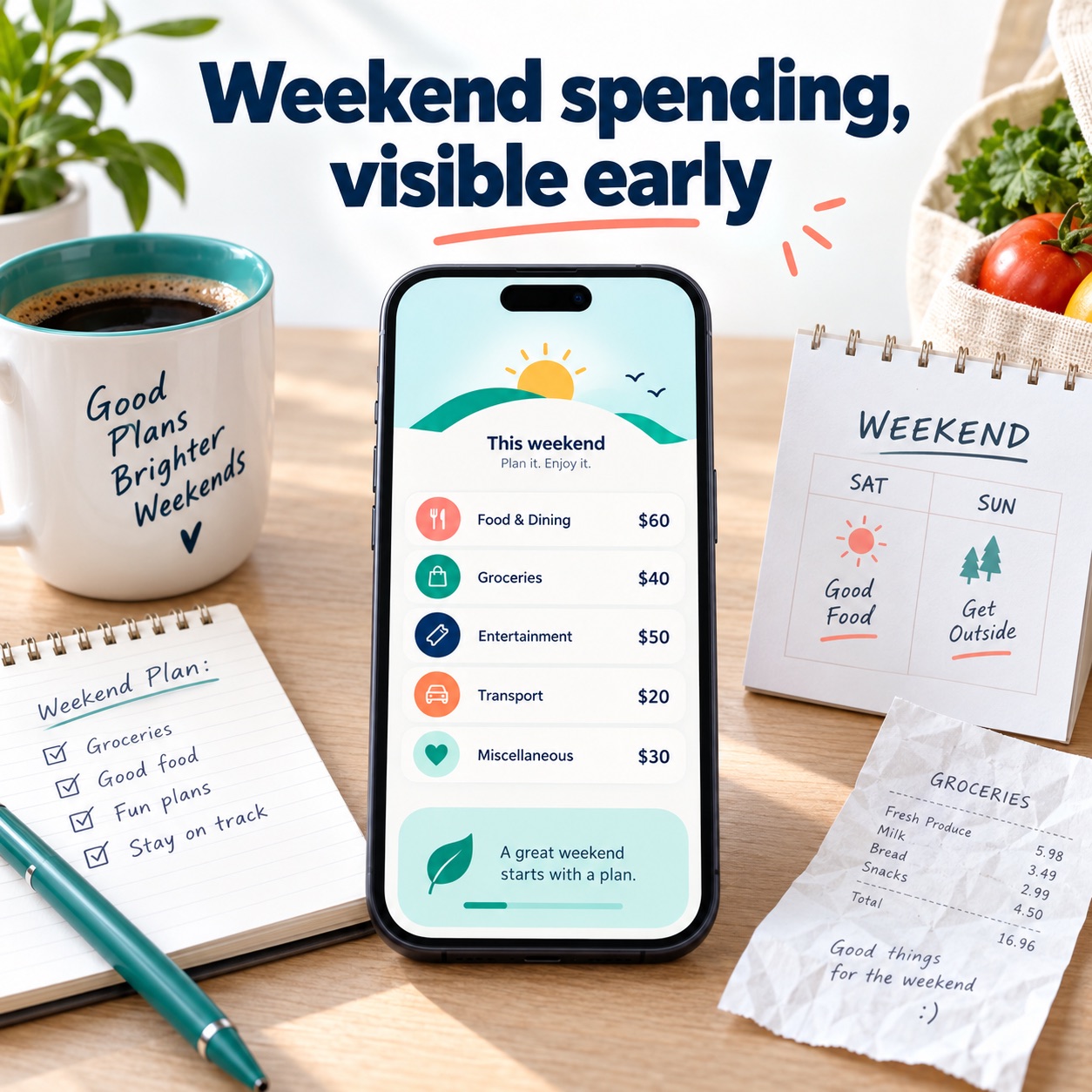
Weekends are where many budgets get blurry. The spending is rarely one big surprise. It is usually a few meals, transport, groceries, errands, subscriptions, and small plans that all happen close together.
A Friday spending check keeps those choices visible before the weekend starts. It does not need to be strict. It just gives the next two days a shape, so you can enjoy your plans without wondering what happened to the budget on Monday.
Start with the weekend you actually expect
Begin with the plans already on your mind. Do not build an ideal weekend budget first. Build the real one.
Write down anything that is likely to cost money:
- groceries or household supplies
- eating out or takeaway
- transport, parking, fuel, or rides
- activities with friends or family
- gifts, school items, or errands
- subscriptions or recurring payments due before Monday
- one flexible amount for unplanned spending
That last line is useful. Most weekends include something unplanned. Giving it a small visible place in the budget is better than pretending it will not happen.
Check the fixed items first
Before looking at fun spending, check what cannot move. A bill due on Sunday, a recurring subscription, or a scheduled transfer can quietly reduce what is safe to spend.
Look at your recurring payments and upcoming commitments. If anything is due before the next payday, treat it as already spoken for. Then review what remains for flexible categories.
This is where weekend planning becomes calmer. You are not saying no to every plan. You are seeing which money is already assigned before making new choices.
Give the main categories a simple limit
A weekend budget does not need twenty categories. Three to five is usually enough.
For example:
- groceries
- meals and coffee
- transport
- activities
- unplanned
Set a simple limit for each one. If a category is hard to estimate, use last weekend as a starting point. The first version only needs to be useful enough to guide the next purchase.
Watch for the Monday problem
The Monday problem happens when weekend spending uses money that was meant for the week ahead. A few small choices on Saturday can make Monday’s lunch, transport, or grocery budget feel tighter than expected.
Before Friday night, look at the first three weekdays after the weekend. Ask:
- What bills or recurring payments are due?
- What everyday expenses are likely?
- Which budget categories need money left untouched?
If the week ahead already looks tight, keep the weekend plan smaller or move one flexible activity to another time.
Record spending while it is still fresh
Weekend expenses are easier to track close to the moment they happen. Waiting until Monday means relying on memory, and memory tends to miss the small things.
Use BillFoldify to record expenses, check budget categories, keep savings goals visible, and review recurring payments in one place. The goal is not to make every choice feel formal. It is to keep the picture current enough that your next choice is informed.
Try a light rhythm:
- enter expenses after a meal, errand, or activity
- check the category balance once each day
- adjust the unplanned amount if something changes
- review the weekend total before Monday starts
This is quick, but it protects the budget from becoming old news.
Keep one thing flexible
Plans change. A friend suggests dinner. A child needs something for school. Groceries cost more than expected. A good weekend plan leaves one flexible amount so the first change does not break the whole budget.
If you do not use it, great. It can stay available for the week ahead or move toward a savings goal. If you do use it, the spending was visible from the start.
A five-minute Friday checklist
Before the weekend begins, run this check:
- Review recurring payments due before Monday.
- List the plans most likely to cost money.
- Set simple limits for three to five categories.
- Leave a small amount for unplanned spending.
- Check what needs to remain for Monday.
- Track expenses while the weekend is happening.
BillFoldify is free and available on iOS and Android. Use it to keep expenses, budgets, savings goals, recurring payments, and spending visibility in one practical place.
A weekend budget does not have to remove the fun. It just helps you see the shape of the weekend before the money starts moving.
Get started with BillFoldify
BillFoldify helps you keep everyday expenses and budgets visible. Visit the BillFoldify website or download the app:

